

Title image © Clint Cearley for WOTC
How to Create and Run an Engaging DND One Shot Adventure
Happy Holidays!
I just spent who knows how many hours writing a guide to a holiday-themed DnD one-shot.
And after the fifth night of writing and research, I realized a couple of things:
1) "I am not close to done..."
2) "This is really multiple blog posts..."
3) "It sure would be nice to have a one-shot guide I could refer readers to..."
So I put that post on pause until 2026 (I know, I know, how on EARTH will my readers ever wait?!?!?) and am writing this one-shot guide instead.
A lot of blog posts have the frequently asked questions at the end, but for this topic they will not do much good tucked away in the rear.
So here is the FAQ right smack dab in the front:
What is a DND one shot?
In Dungeons & Dragons (or any TTRPG), a one-shot is a short adventure designed to be played to completion in just a single session. They are not long games that might go on for months, but can be completed in a few hours or a single day.
How long does a one-shot adventure take?
In planned poorly, who knows! Many supposed "one-shots" blossomed into 10+ session campaigns. But in my opinion, a one-shot is either 3 - 4 hours long (to be played in a single evening) or 6 - 9 hours long to be played in a single day).
What is the most important question for DMs when creating a one-shot?
"HOW MUCH TIME DO YOU HAVE?" The length of your one-shot determines your adventure design. More than tone. More than plot. More than encounters. A good, fun, memorable one-shot is only possible if it remains a one-shot!
What must DMs determine to help them control the time of a one-shot?
How many players are participating in the DnD one-shot. The more PCs, the longer the encounters, the less encounters you can include in the mini-adventure.
How do I adapt a campaign idea into a one-shot?
As Uncle Joey from Full House says: "Cut-it-out." You edit and edit and edit a short campaign until only the essentials remain. This often means two related things: 1) DMs must streamline the campaign to finish in the agreed-upon time, and 2) there are less options for players and less opportunities to determine the shape of the story.

© Marta Nael for WOTC
The Outline/Structure of Your One Shot
Now, if you noticed, a lot of those FAQ&As were centered around TIME. And that is not coincidental. Unlike normal TTRPG campaigns, a DnD one shot is first and foremost defined by its ability to be played in its entirety within the allotted time. If it cannot be finished on time, then it is by definition NOT a DnD one-shot!
And yes, this kinda-sorta matters. For example, say you have a friend visiting from out of town and this friend wants to play an in-person one shot before leaving. It's no good if, after 3 hours, the party only exits the tavern by the time the player needs to check in for a flight! They COULD resume on VTT, but if you had reserved a night at FLGS with special terrain and minis, it will still be a let down.
Which means your pre-adventure outline is SUPER important.
First of all, whether you are building a DnD one shot, writing a screenplay, or crafting a speech... the STRUCTURE you build upon will determine your success. It does not matter how exciting your ideas or important your aims may be... there is no overcoming a bad story structure.
Those maxims apply to app storytelling/communication, but they are especially true when you are working under time constraints and trying to be efficient with your storytelling. A clear outline that follows a proven structure will allow you to make the most of every moment. Like packing for a trip, when you have to fit a lot of stuff into a small space, you cannot be haphazard. No wasted space.
A successful one-shot requires a tight, simple, clear structure:
And the three best one-shot adventure structures are:
1. The 5-Room Dungeon Structure
- Entrance or Guardian
- Puzzle or Role-Playing Challenge
- Trick or Setback
- Climax, Big Battle, Conflict
- Reward, Revelation, Plot Twist
2. The 3-Act Structure
- Act 1: Establish the setting, different characters, and call to adventure.
- Act 2: The bulk of your adventure. Where questions are answered, characters grow, and stakes are raised.
- Act 3: Tie everything together to a dramatic and exciting conclusion.
3. The "Just Plan Two Encounters and Build Around It" Structure (seems popular on Reddit).
I feel like I've said this a lot lately in blog posts, but I really don't want to "reinvent the wheel" here. I could talk and talk and talk about each of these structures (maybe a later blog post), but this blog post is about "running a one-shot," not breaking down the nitty-gritty of TTRPG adventure structure.
So if you want to learn more about building your one-shot within those established structures, then follow the links! But here is my highly-opinionated, barely-researched take on the best use of each of those adventure outlines:
- If you are playing a single session (4 hours), then the 5-room dungeon method is best.
- If you are playing a one-day session (6 - 9 hours), then the 3-act structure is better.
- If you do not want to prep as a DM, or your players want to do funny role play as ridiculous characters, then "2 encounters and figure it out" works too.

© Clint Cearley for WOTC
"What Encounters Should I Include In My Structure?"
Like any TTRPG adventure, the encounters you choose depends on what you and your table wants to play. I can't suggest winner-take-all combat if everyone is in the mood for an off-the-rails, fantasy-themed wedding.
But, in general, I would stick to one of two extremes:
1) Lean into combat or role-playing
In a campaign, focusing exclusively on combat or role-playing could get boring after a few sessions. But a DnD one shot is either ONLY a single session or a single day, so it is actually ideal to use a campaign format hyper-focused on a single pillar of DnD.
- Combat only? Try a gladiator-style, PvP battle royal, or maybe different stages of a siege akin to Helm's Deep. Or maybe various encounters with jungle beasts as they hunt a monster terrifying a village? Yes, role-play will exist within combat and between encounters, but the adventure will primarily be action-oriented and combat-centric.
- Social only? Have players solve a mystery in a walled town where they must surrender their weapons. Or maybe they attend a ball searching for a disguised Red Wizard spy? Or maybe they are attending a wedding and are compelled to help the bride escape. Yes, exploration will still exist, and maybe it ends with a combat encounter, but the lion's share of the adventure will be role-playing amongst themselves and with NPCs.
This style of DnD one-shot is especially helpful if your group wants a break from the campaign to do something different. In a years-long trek across the planes with ample character development and volumes of notes, it can be nice to just make a quick character and hit some stuff for a bit!
(If you are not following the 5-room dungeon structure, this method works best for one-shots under 4 hours).
2) A PERFECT Balance of Exploration, Social, and Combat Encounters
This is what most of those structures listed above are designed around. In my opinion, the most satisfying adventures feature a balance of the three pillars of DnD (social, exploration, combat). And it works well for one-shots for three reasons:
1. PACING: Long story short, each of the pillars has a different "tone/energy," and a good story requires building and releasing tension. Having dynamic encounters that shift between pillars keeps the story engaging.
2. VARIETY: Variety is the spice of life; it keeps thing interesting. This is especially important if you are playing for 8 hours on a Saturday.
3. SATISFACTION: The pillars contain everything players expect from a DnD adventure. They want to fight a monster, free a kooky NPC, and discover a secret door. When one is left out, players often notice.
It is the secret sauce that has made dungeons work since the 70s.

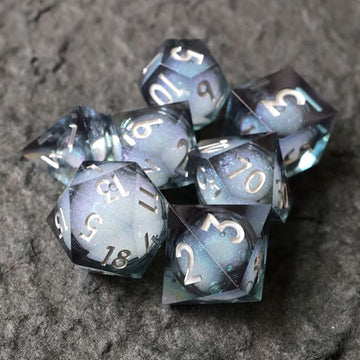
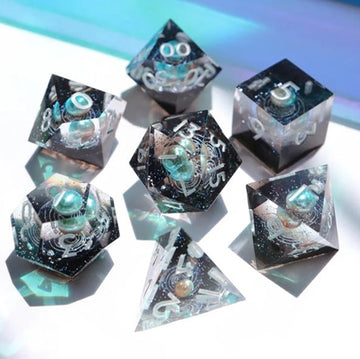
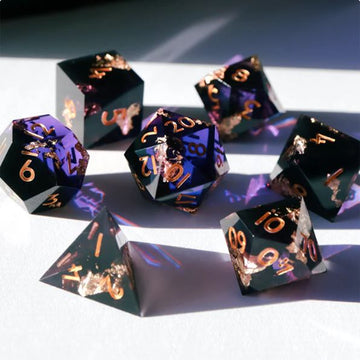
Do You Need Dice? We Have LOTS.
Sharp Edge? Gemstone? Liquid Core?
Shop Dice Now
How to Run a One Shot (DM Essential Tips)
I am going to assume my readers are rational actors, have clicked on the above links, and already chosen their adventure structure. They have a basic idea of a threat, plot, setting (etc.) and are beginning to plan out the one shot within their chosen framework. But before you gallivant away into your imagination, you need to keep a few things in mind to make your one-shot good:
1) Avoid Over-Planning
I repeat: avoid over-planning!!! A one-shot is all about fitting the entire adventure in a pre-determined amount of time. TTRPGs are notoriously time consuming and you will need a lot less than you think. Pick the encounters you want and need and "kill your darlings." Do not get tangled in too big a story. STICK TO YOUR STRUCTURE.
2) No World Building
You don't have time. I wrote a whole post on why Christmas one-shots are a great way to introduce beginners to DnD and the principle holds true. There is no time to establish the world, which means you need to pick a setting your players already understand and can immediately immerse themselves in.
3) Get to the Point
Once again, you do not have a lot of time to slowly peel back the curtain of the play and reveal what is REALLY going on. You also do not have time to communicate this information indirectly via an interesting NPC or encounters. The introductory monologue at the start of the session needs to directly tell the players either A) exactly what they need to do (if you are doing a >4 hour adventure) OR exactly what the problem is (if you are doing a 6+ hour adventure). Start in media res, or while something is going on, or have a big thing happen right at the beginning.

© Envar Studio for Riot Games
4) ONE Theme/Tone
TTRPGs are an immersive medium. You cannot rely on exposition dumps; players take time to absorb the tones, emotions, and imagery of a setting. And that is time you do not have. Pick a single theme, flesh it out, and stay there. Do not make it too complicated or nuanced.
5) Quick Transitions
In my opinion, this is what most DMs neglect, and it shows in their one-shots. In a normal DnD campaign you can afford to improve you way through a transition, parse out player emotions during a long rest, or just use the natural gap between sessions to pivot.
You do not have this luxury when running a DnD one-shot. Use one sentence to summarize what happened, another sentence to remind the players of their goals, and a third and final sentence to establish their next options. Keep exposition short, describing the scenery and then finishing with: "After a few hours, you arrive at the dungeon entrance."
6) Embrace Railroading
I think railroading isn't anathema like it used to be, so I don't need to write an aggressive apology on its behalf. So I'll just do one sentence: just as some tables like more plot structure, some adventures require a more rigid structure. One-shots are such adventures.
Create an obvious path for players to follow. Build into the adventure a countdown that creates urgency and keeps the table focused on the main task. And if something is taking way too long, feel free to skip a planned scene or make a fight easier. During a one-shot, you are not just a DM, but a timekeeper.
7) Clear (Maybe Instant) Stakes
Some one-shots need the stakes established within the first couple of minutes. Others need them established within the first couple hours. Regardless, they MUST be established in no uncertain terms. Tell them directly to their faces what will happen if they do not act or fail, and what they can achieve if they triumph.
8) Build to (And Protect) the Final Hour
Finally, we arrive at the reason it is SO IMPORTANT to manage time well in a DnD one-shot. Because the most unsatisfying thing in the world is spending hours building a story, only to rush the ending. The whole adventure has been an investment in a satisfying climax. Cut anything and everything out so that you have enough time to make the final confrontation good.

© Anato Finnstark
DnD One Shot Tips for Players
The DM determines a good one-shot since they not only create the story and build the encounters, but also control the time and pacing. But it is not just up to them. Just as a successful DnD one-shot comes with some structural limitations for DMs, so too do they come with creative limitations for players. If you are a brand new player, and you want to make this one-shot as good as it can possibly be, then stick to the following tips.
Build a Relevant Character: If your DM hasn't already told you, ask what the themes/setting of the campaign is, and make a character who matches the tone. You just have a single session, so your character should have instant motivation to jump into the story right away. This is definitely not the adventure to peel back your character's mysterious past.
Go With the Flow: Do not get bogged down trying to figure out the best interpretation of the rules. Any time you spend looking stuff up online or flipping through the Player's Handbook is time you could spend playing. Once the DM makes a decision, don't push back. Roll with it and keep the story and gameplay moving.
Stay on Subject: Other campaigns are great for going on tangents and just being silly, but there isn't any time in a one-shot. Keep your role-playing focused on information relevant to the adventure. Listen carefully to the DM's descriptions and directions and let them guide you a little bit more than usual.
Conclusion: What Makes a Good One-Shot?
A solid D&D one-shot is best when it A) is a fun adventure that B) fits within the agreed-upon time C) has directions, goals, and stakes and D) has an exciting ending that brings the story to a satisfying conclusion. It usually follows a clear structure, has limited encounters, and requires careful time management by the DM.

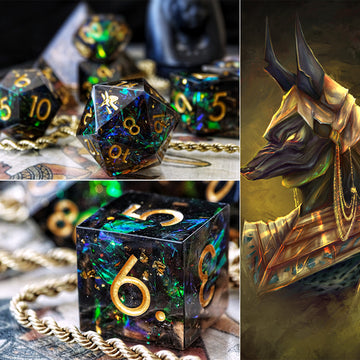
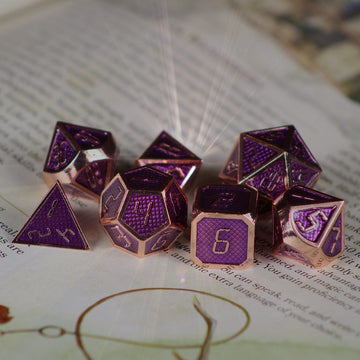
Do You Need Dice? We Have LOTS.
Sharpedge? Gemstone? Liquid Core?
Shop Dice Now
Riley Rath

Riley is a freelance tabletop games copywriter, content writer, and marketer based out of Spokane, WA. When not playing or writing about board games or DnD, he is busy with family, hiking, cooking, and gardening... very hobbit-like for a 6'4'' dude. If you need help promoting or marketing your tabletop game, please visit his site and reach out!