

Title image © Blake Rottinger
DnD Scout Rules: Roll, Plan, and Get Back Into Action!
- Scouting is different from stealth; it's about gathering information quickly from a distance, not sneaking past guards.
- The primary goal of scouting is to identify threats, entry points, and enemy numbers to plan your next move.
- If you want to role-play scouting as an encounter, use a combination of skill checks (Perception, Investigation, Stealth, etc).
- If you want to have it over and done with in 5 minutes, just have players roll a d2, d4, or d6 to determine how many clues they get.
- Players can consume spells or class abilities for additional clues.
- The post also outlines the Scout Rogue subclass.
Introduction
During my "DM sabbatical," I have had the pleasure of being a player again. Got to play a surfer/frat bro red Dragonborn farmer barbarian who laughs maniacally when he rages and carries a big bag of farm tools he rifles through for random weapons every round.
Pretty fun.
Highly recommend.
Will play again.
But we came across a fortress and the party had to "scout it out" to determine how we would proceed:
- After 30 minutes of a single player stealthing and role-playing, the session ended and we had not attacked...
- 2 weeks go by with texts discussing strategy...
- The session comes around, we review, and finally the 'flustered' (DM, forgive me if that is the wrong word!) blurts out: "Guys, I reeeeeeaaallly think you are overthinking this."
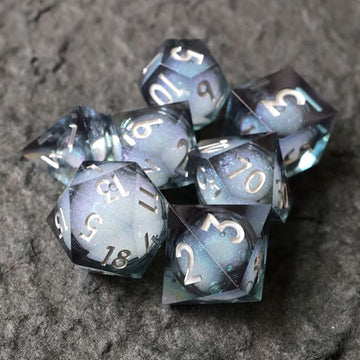
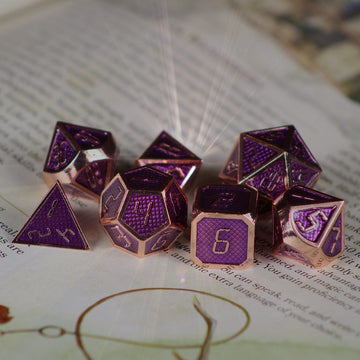
Now, I suspect several other players were perfectly fine with this. And maybe you and your table are too! In which case, feel free to abandon this blog post (may I suggest browsing AD's great selection of 7-dice dnd dice sets?)
But this wasn't my first standard 5e scouting experience. And I am sure you are familiar as well. And I also suspect that many people feel the same way I do:
Scouting is necessary, but extremely time-consuming and boring.
So the other night it dawned on me: "Oh man, I bet there are, like, ZERO posts about scouting mechanics online." And I was (pretty much) right! But also... 90% of searches for "dnd scout" are going to be about the Rogue subclass... so I definitely have to include some of that. And have placed it at the end.
The rest of the post outlines "scouting," offers an easy mechanic for running a 5e scouting encounter, alongside spells and class abilities relevant to scouting.

© Blake Rottinger
What Is "Scouting"? How Is It Different than Stealth?
Historically, a scout is someone who performs military reconnaissance. They were excellent navigators, survivalists, marksmen, and horsemen. They would scout ahead of the main army... often days ahead for weeks at a time... and report back on the surrounding terrain, natives, etc.
Here are some definitions from Merriam-Webster:
- Stealth (verb): "a cautious, unobtrusive, and secretive way of moving or proceeding intended to avoid detection."
- Scout (verb): "to explore an area to obtain information... to observe in order to obtain information or evaluate."
In summary, there is some overlap, but they are not the same. Someone who is scouting is trying to be sneaky and remain hidden, but their goals are limited to acquiring information. But someone being stealthy could be hiding, sneaking past, or infiltrating... with the purpose of learning, staying safe, sabotaging, or assassinating. For more detail on how different scouts function, check out this cool post by Simon Carryer.
In Dungeons and Dragons, stealth is a simple skill check. However, since "stealth missions" are rather complex, I believe this simple mechanic is often insufficient for fun "infiltration missions." Which is why I also created two versions of homebrew mechanics for exciting stealth encounters (follow the link to read it!).

© Dream Reactor
Key Objectives for Scouting Rules
As far as I know, there are no official mechanics for "scouting" in D&D 5e. Instead, most tables use a combination of WIS checks (the vast majority of perception checks) while players remain either hidden or while making stealth checks.
Just like in the real world, the purpose of "scouting" is to get actionable intelligence so your party can gain a tactical advantage. Helpful information so players can make informed decisions. You scout, learn, and then plan... so that your next move goes off without a hitch.
The goal of these mechanics is simple: make the scouting process A) faster and B) more helpful.
Traditionally, scouting in D&D can become a mini-game of its own. The party's scout—often a skilled hunter, tracker, or rogue—creeps forward, making a series of rolled checks for Stealth, Perception, and maybe Survival. The Dungeon Master then describes what the scout sees, inch by painstaking inch. And while detailed, it has its downsides:
- Time Consuming: it's a loooot of back and forth that eats up table time.
- Exclusionary: often only the stealthiest player plays intentionally while the majority of the table waits around.
- Basic: it can be 30 minutes of game time just to figure out what's on the other side of a hill.
- Low-Immersion: while it can be very immersive, more often than not it devolves into a literal fact-finding mission devoid of stakes.
- Inaccurate: if the player rolls a bad Perception check, the information provided may not even be accurate.
- High Risk, Low Reward: good rolls just allow you to continue, while a single bad roll can ruin all plans, hopes, and dreams.
In summary, many "scouting" encounters are not very immersive or inclusive, and they impede good game pacing. And that's IF they are helpful...

© Paulo Loveranes Galamgam
New Mechanic: Easy DnD Scout Rules
Like I said before, if you want to keep doing it the normal way, go for it. But if you want to REALLY speed it up with something more abstract, here are some quick homebrew scouting mechanics... just 6 easy steps!
1) Describe the Setting and/or Bust Out the Map
Illustrate the environment. Set the mood. Establish the tone. Paint a picture in their heads that leaves plenty of room for mystery. Build their curiosity... it's the fuel that makes everything in the exploration pillar fun!
2) Have Players Roll
Yes, BEFORE players decide what to do, first have them roll:
- A d2 (flip a coin) if their Stealth or Perception is less than 10
- A d4 if their Stealth or Perception is less than 15
- A d6 if their Stealth or Perception is less than 20
This roll will determine how much their character will learn from scouting. Rolling very low/high will likely impact how they role play or describe what their characters do.
3) Players Describe How Their Character Will Scout
Now, just like in any normal encounter, players make their choices. The declaration of intent is the key, as it may determine WHAT you reveal to them.
4) Whatever They Roll, That Is the Number of "Clues" You Give Them
One discovery/revelation per number rolled. So if they roll a 3, then their scouting will result in three pieces of information.
5) DM Provides Players With Information
These rules are designed for speed and clarity, getting your players the intel they need without getting bogged down in endless rolls. The focus is on quick resolution so the party can get back to the action. Don't overthink what you reveal. Don't re-narrate every discovery. Just provide a piece of appropriate information based on what their characters do.
6) Players Make Plans With Said Information
If players want to role play sharing the information, fine. If they want to immediately strategies and execute a plan, also fine. But now they have that information, and don't have to spend precious free time debating what MIGHT be there.

© Bram Sels, WOTC
5e Scouting Mechanics FAQ
"What Are Some Things Players Would Want To Discover?"
- Number of enemies
- Types of enemies
- Evidence of monsters
- Number of rooms
- Entry and exit points
- Defensive positions
- Mechanical traps
- Spells and alarms
- Environmental hazards
- Signs of an ambush
"What Kinds of Clues Do I Provide?"
Simple ones. These nuggets of information should be concrete and useful, allowing players to make strategic decisions. If you have a party of four players, odds are you will be giving them at least 8 clues. So you don't need a long, detailed explanation. Based on the list above, some examples might include:
- "The cave smells like rotting flesh."
- "There are 4 guards at the entrance."
- "This is a desecrated tomb."
- "The guard dog looks hungry."
- "The walls of the fort look strong and 20ft high."
- "These NPCs are local bandits."
- "There is an additional entrance/exit in the back."
- "The stone pillars are crumbling and look unstable."
- "There is a changing of the guard at ___"
- "You see tons of tracks leading in and out of the cave."
- "You see evidence of mechanical traps in the hallways."
- "The hallways are 10 feet wide."
- "You detect a magical presence in the area."
- "The nearby waterfall masks your movement."
"So It's Just a Roll... Player Creativity Doesn't Matter?"
Nope! Once you describe the setting, players are free to get creative as to HOW they scout. Are they circling the perimeter? Climbing a tall tree for a better view? Using a familiar to fly over the walls? If they describe something particularly effective or helpful, you can award them with an automatic clue, or let them roll with advantage.
"What if They Are Trying to Do Something Really Difficult?"
The biggest time-sink is often the sheer number of rolls requested. But if they are attempting something daring, commit to only one d20 roll per player. The player describes their general approach, and the DM calls for a single, comprehensive rolled check to determine the outcome of the entire endeavor. A relevant skill check includes things like Perception, Stealth, Deception, Insight, Investigation, or Survival.
"What Situations Make Sense for Each of Those Skills?"
- Perception: spotting details from a distance. Use it when a character is looking and listening for guards, patrols, or obvious features.
- Investigation: deducing information from clues. Use it when a character is examining tracks to determine a patrol route or studying the architecture to find a weak point.
- Survival: tracking and navigating the wilderness. Use it to find hidden paths, identity signs of recent passage, or predict the movement of natural creatures around the target area.
- Insight: intuition on personality and motive. Learn details about NPC stat blocks just by observing them.
- Deception: lying or confusing another creature. Can create a distraction to draw attention away from the player character.
- Stealth: while not a primary information-gathering skill, it is fundamental to staying undetected.
"Doesn't This Make Stealthy, Dex-Based Deception Characters Weaker?"
Not at all. I would say that any character with expertise in Perception or Stealth gets to roll a d8 OR d6 with advantage as they scout. Besides, the majority of these players are OP anyway.
"What About Spell Casting or Character Abilities?"
Players can burn a relevant and consumable spell or class/racial ability for an additional scouting observation (see below).
"What About Critical Failures?"
Not relevant. They are not rolling d20. The idea is that they are competent and being VERY careful as they scout. Not taking as big of risks.
"What if a Character Is SO BAD at Stealth or Perception That It Makes No Sense for Them to Scout?"
Then don't have them scout or roll!

© CD Project S.A.
Which Spells Would Provide Bonuses?
- Find Familiar: Summons a spirit that takes an animal form (like an owl or spider) to scout for you.
- Beast Bond: Allows you to see through an animal's eyes provided you have a bond with it.
- Silence: Make zero noise come from a specific area. Allows verbal communication between characters without giving yourselves away.
- Enhance Ability: If you upgrade Dex or Wis, your Stealth and Perception will be much, much better.
- Invisibility: Makes you unseen, perfect for getting closer without being detected.
- Locate Object: Lets you know if what you need is, in fact, in the place you are about to search.
- Pass Without Trace: Grants a +10 bonus to Stealth checks for you and your group, making infiltration easier.
- Clairvoyance: Creates an invisible sensor that lets you see or hear a remote location.
- Arcane Eye: Sends an invisible, magical eye to explore areas up to 30 feet away from you.
- Scrying: Allows you to spy on a creature or location you are familiar with from anywhere.
Notice that cantrips are missing from this list. That is intentional. No getting a bonus clue for using "guidance" in a Perception check. They can flavor your descriptions of your character scouting, but if they do not consume a resource, then they do not provide a clue.
What Other Class Abilities Might Provide a Bonus?
These abilities are a core part of a character's identity and should be encouraged. When a player builds their character around being a scout, their features should shine during these moments. From a Ranger's familiarity with the wild to a Rogue's expertise, these abilities are tailor-made for reconnaissance.
- Expertise (Rogue): Doubles your proficiency bonus for two skills, often chosen for Stealth and Perception.
- Natural Explorer (Ranger): Provides advantages when traveling and tracking in favored terrain.
- Slow Fall/Unarmored Movement (Monk): Allows for safe descents and faster movement, useful for navigating terrain.
- Wild Shape (Druid): Can transform into a tiny, inconspicuous animal (like a spider or a mouse) to spy unnoticed.
- Jack of All Trades (Bard): Adds half your proficiency bonus to any ability check you aren't proficient in, a great all-around boost.

© Jack Kaiser for Unorthodoques
BONUS: The Scout Rogue Subclass
While there are no mechanics specific to scouting, there is a Rogue subclass called "The Scout" featured in Xanathar's Guide to Everything. As a result, any content attempting to cover DnD scout rules is going to feel incomplete if it fails to cover the subclass.
First, let's cover the standard Rogue class abilities:
- Expertise (lvl 1): basically... never fail two skills of your choice ever again.
- Sneak Attack (lvl 1): once per turn, get advantage and extra damage.
- Thieves Cant (lvl 1): talk in the riddles of the criminal underworld...
- Cunning Action (lvl 2): you move so fast you always get a bonus action for every round of combat.
- Roguish Archetype (lvl 3): pick a subclass.
- Uncanny Dodge (lvl 5): use your reaction to just say no to damage.
- Evasion (lvl 7): fireball centered on you? You can still jump out of the way.
- Reliable Talent (lvl 11): never roll lower than a 9 or 10 on proficient skills.
- Blindsense (lvl 14): like super duper passive perception for invisible creatures.
- Slippery Mind (lvl 15): your mind is a VAULT of Wisdom.
- Elusive (lvl 18): so quick no enemy ever has the upper hand.
- Stroke of Luck (lvl 20): did you miss? Uh... no... no you did not.
In the 2014 5e edition, the Scout Rogue was kinda a better ranger archetype than the actual Ranger. This subclass doubles down on what rogues already do well—skills and mobility—and tailors them for the wilderness:
- Skirmisher (lvl 3): use your reaction to gain an extra step.
- Survivalist (lvl 3): the "natural explorer feature" for scouts.
- Superior Mobility (lvl 9): no prey escapes you with extra fast walking speed!
- Ambush Master (lvl 13): as an ambush master, you have advantage on initiative and surprise attacks.
- Sudden Strike (lvl 17): more sneak attacks... woo!
While you do not have to use a bow, most Scout PCs are archers or have some ranged weapon.
"What core rules should I follow when creating a DnD scout character?"
Focus on Dexterity for Stealth and Wisdom for Perception and Survival. Prioritize these stats when assigning your ability scores. Look for features that grant expertise in these skills, as doubling your proficiency bonus is a huge advantage. A high Wis mod will make your Perception checks much more reliable.
"Can non-Rogue characters effectively fill the DnD scout role?"
Absolutely! A Ranger, with their survival skills and tracking abilities, makes a natural scout. Druids can use Wild Shape to become inconspicuous animals. Even a Wizard with a familiar can be one of the most effective scouts in the game.

© Embracer Group
Conclusion
Implementing these scouting rules will enhance your Dungeons and Dragons sessions by streamlining the exploration process and keeping players engaged. Coupled with the right spells and class abilities, these rules will help your players feel empowered and informed, resulting in a more thrilling gameplay experience.
One of the nice benefits of these DND scout rules is all the stuff you DON'T have to worry about:
- Bonus action
- Walking speed
- Passive passive scores
- Multiattack
- INT saving throws
- Hit points
- NPC stat blocks
- and so much more!
It's so, so, so simple. So next time your table needs to scout out a location before attacking, give these 5e scouting mechanics a try!
Consider Our Other Posts on Exploring the Exploration Pillar
Riley Rath

Riley is a freelance tabletop games copywriter, content writer, and marketer based out of Spokane, WA. When not playing or writing about board games or DnD, he is busy with family, hiking, cooking, and gardening... very hobbit-like for a 6'4'' dude. He is a tabletop games copywriter and marketer... but also LOVES that he gets to be a DnD blogger and content writer as well!